Notes from the field
The Planetary Cost of the Prompt
Apr 1, 2026
5 min read
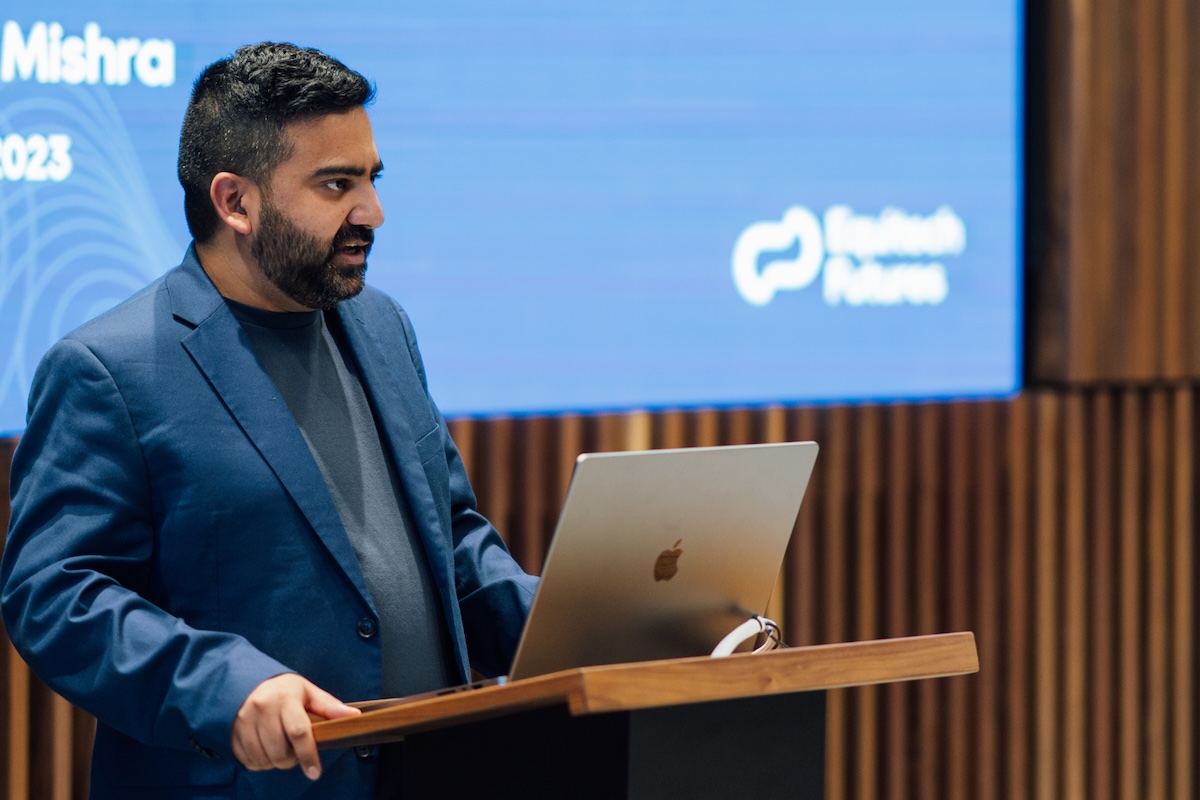
Every time you type a prompt, somewhere a data center draws power. That observation anchored Dr. Abhilash Mishra's talk at the Rutgers Climate & Energy Institute's Center for Sustainability Governance on March 27, 2026, and it set the tone for a frank reckoning with AI's physical footprint.
Mishra, director of the Kevin Xu Initiative at The University of Chicago and co-founder of Equitech Futures, came to New Brunswick to complicate the story we tell about AI. He argues the AI boom and the net-zero transition are on a collision course, and the governance frameworks we've relied upon to manage that tension are weakening faster than the problem is growing.
The Numbers
By 2030, global AI data centers are projected to consume as much electricity as Japan, the world's fourth-largest economy. A single gigawatt-scale facility draws enough power for a million homes. US data center electricity demand is on track to grow 130% by the end of the decade, with more than 40% of that power still sourced from fossil fuels. Water tells a parallel story: US data centers used 17 billion gallons for direct cooling in 2023, and a further 211 billion gallons indirectly through electricity generation. That figure could double by 2028.
These aren't distant projections. They describe infrastructure being built right now, in communities across Virginia, Ireland, the Netherlands, and India, where residents are pushing back against the physical reality of "the cloud."
A Governance Gap
The political scaffolding meant to address all this is coming apart. The US withdrawal from the Paris Agreement, for the second time, combined with exits from the UNFCCC, IPCC, and the Green Climate Fund, does something beyond policy reversal: it legitimizes inaction elsewhere. NDC ambition levels globally are stagnating. Top-down state action, Mishra argued, was never sufficient on its own. It is now clearly insufficient.
Three Levers, Not One
Mishra insists that the climate response has over-indexed on state action while leaving two levers underused: markets and civil society.
Markets are beginning to move on efficiency. Small language models can match large ones on specific tasks at less than 1% of the compute cost. Enterprise buyers are starting to demand energy transparency in AI procurement. Startups are winning on efficiency, not just capability. Mishra's airline analogy is useful here: once carbon estimates appeared on booking pages, consumer behavior shifted and companies competed on green credentials. The same dynamic is possible for AI, given the right tools and disclosure requirements.
Civil society is already acting. Communities in Amsterdam, Northern Virginia, and Dublin have delayed or conditioned data center projects. In India, a growing movement is connecting AI compute costs to rural power access. These are not fringe efforts. They represent a form of accountability with real leverage, and one that Mishra suggested is historically underestimated.
Why It Matters
The governance gap is real, but Mishra's talk frames it as an opening rather than a dead end. Researchers, technologists, civil society organizations, and informed citizens can build the norms, tools, and market signals that state action can no longer guarantee alone.
For Equitech Futures, this is the terrain we work in, at the intersection of emerging technology, equity, and governance. Sustainable AI is not a technical problem waiting for a technical fix. It is a collective action problem, and collective action gets built from the ground up.
Written by

More articles
.jpg)



.jpeg)

Newsroom
From Minister of Information to the UN: Aicha Thiendella Fall’s journey into global security












Newsroom
Otieno Collins Junior Reflects on His Journey from Capstone Project to Prize-winning Startup


.webp)





.webp)


.webp)


.webp)
Newsroom
No Innovator Left Behind: How Equitech Futures uses philanthropic capital to maximize impact


Newsroom

.webp)


.webp)

.webp)


.webp)


.webp)


.webp)


