Newsroom
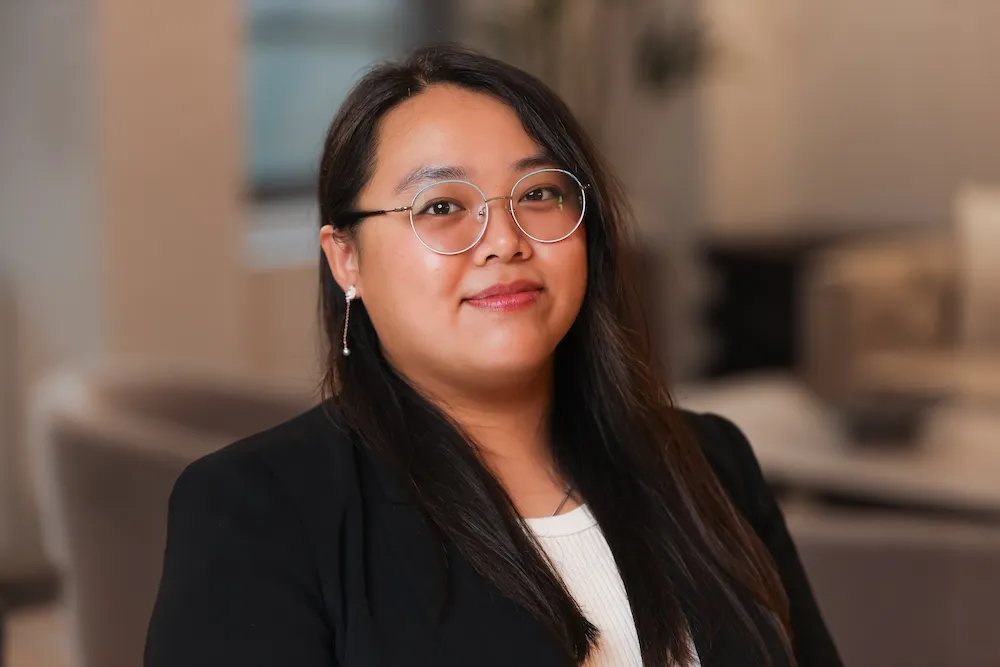
Anna Upreti Is Writing the Values Baked into Sarvam, India's Sovereign AI Model
Jun 16, 2026
5 min read
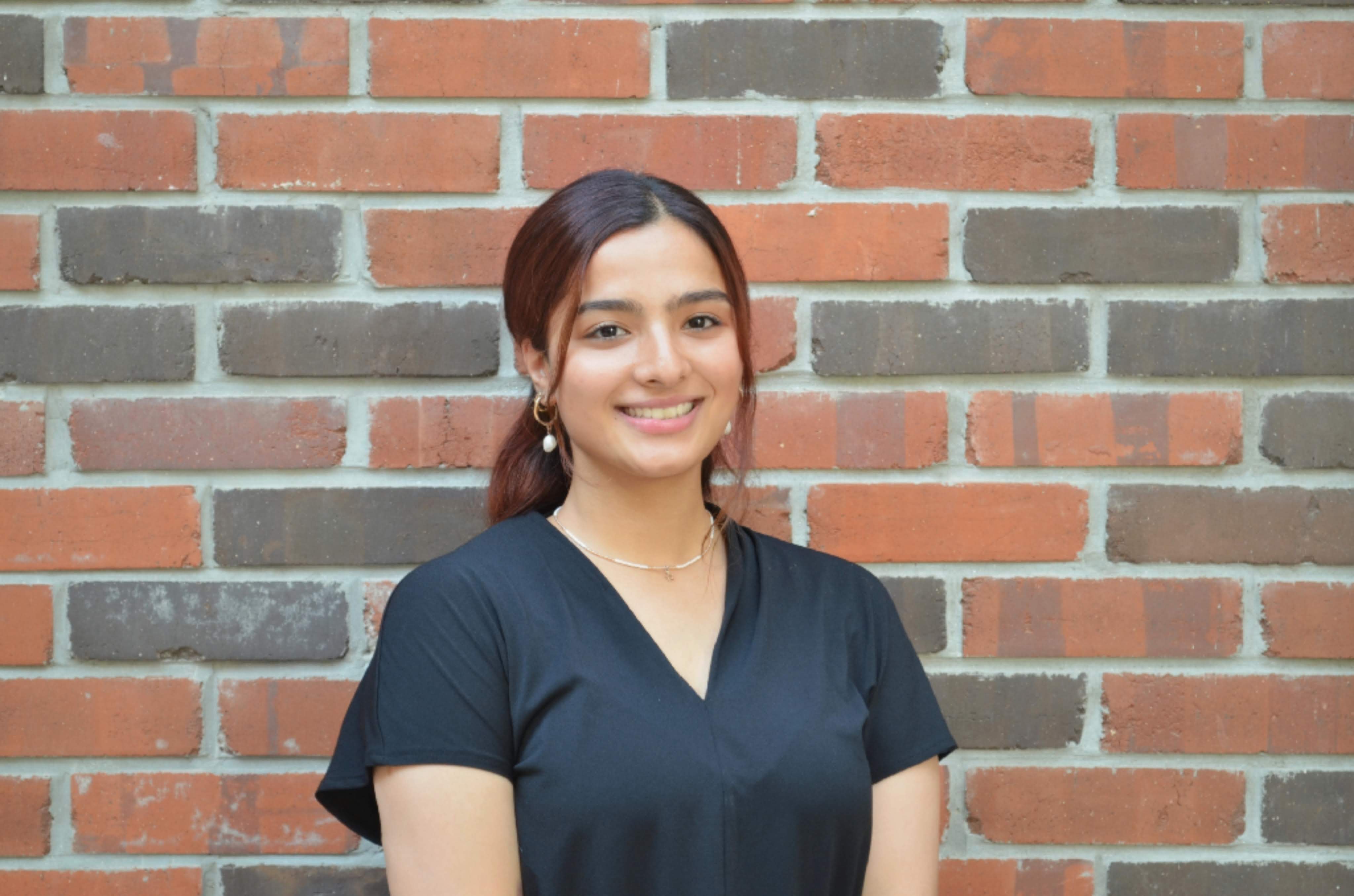
There is a document at the core of every large language model — a specification, sometimes called a constitution, that defines the values the model must hold and the harms it must refuse. Writing that document for an AI built to serve India, across its twenty-two official languages, its vast social and economic stratifications, and its political complexity, is one of the harder problems in applied AI alignment. Anna Upreti, Research Engineer at Sarvam AI, knows this better than most. She is one of the people who wrote it.
It is a role that suits her in ways that become clear when you trace her path from her earliest years in India to the inaugural 2021 cohort of Equitech Scholars to one of the most important AI companies her country has ever produced.
The Kid Who Wanted to Challenge Herself
Anna grew up loving two things that most people treat as opposites: mathematics and understanding people. As a child, she experienced them as separate pleasures. When it came time to think about university, as most math-loving kids in India do, she started training for the IIT-JEE entrance examination, the gateway to the country's engineering elite. But getting to coaching was not as straightforward for her as it was for her male peers. It meant traveling across Delhi late at night on the metro, often still in her school uniform, and the journey came with a tax none of the boys had to pay. She was groped. She was followed. The fear became a constant companion, and over time it wore her down until the path to technology simply felt too costly to keep walking.
What stayed with her was not just the fear but the clarity it produced. Even as it was happening, she could see that the structures around her hadn't been built for someone like her to succeed. The obstacle wasn't her ability or her desire. It was the design of the world she had to move through.
It was a realization she had brushed up against before. In school, she had worked on childhood immunization in two Uttar Pradesh villages, and found that the reason so few children were being vaccinated had nothing to do with the medicine. The drives required a parent to be physically present, which quietly excluded the children of daily-wage workers who couldn't afford to miss a day's pay. Move the camps to schools, let a teacher or elder stand in, and the numbers transformed. Structures, not individuals, were often what decided who got left out.
She had also been reading Poor Economics, where Abhijit Banerjee and Esther Duflo made the same idea vivid, that data-led structures could illuminate and improve the lives of people who are rarely counted. So when the path to technology grew too punishing, the choice felt almost natural. She would go to Ashoka University to study the thing that had already proven its power in her own experience: economics, public policy, the architecture of who gets to succeed and who gets left behind.
The liberal arts structure of Ashoka changed her direction almost immediately. In her first year, she was required to take courses across disciplines, and a mandatory computer science class pulled her straight back into the thing she had walked away from. This time the setting was different, safe and open and hers to pursue on her own terms, and she enjoyed it far too much to let go again.
After conversations with professors, she reached a conclusion that has guided her ever since: if her goal was to have a positive impact at scale, and if she genuinely loved technology, then computer science was the right vehicle. She switched majors.
Mathematics came later, and for a reason she tells with self-aware humor.
"I saw some of my seniors doing math, and I just thought they were very, very cool, and very, very intimidating. I didn't want to let that thing intimidate me." She made it through, and the humbling experience of doing serious mathematics ("you end up thinking, there's so much I don't know") shaped how she thinks about intellectual rigor to this day. There were eight students in her mathematics cohort. Anna was the only girl.
That pattern would repeat.
A Project Born from COVID, and a Thread That Never Broke
By the time Anna sat down with the Equitech Futures Institute application in 2021, she was already asking a question that would prove to be a unifying theme in her career. The pandemic had forced her to sit with her own struggles in a way she had long deferred, and as she worked through them, she began to notice the same quiet toll in the people around her: family, friends, and colleagues carrying an emotional and psychological weight that almost no one was naming while physical health dominated every conversation. She began building a mental health chatbot, attempting to bring the kind of structured cognitive support that evidence-based therapy provides to people who had no other way to access it.
It was early work, pre-LLM, careful and bounded. But the impulse behind it has never left her: technology's deepest obligation is to extend access to people who have been left outside it. "It still ties into my work today at Sarvam," she says, "because even when we were building the model, I was making sure that these kinds of conversations are especially taken care of. It's a thread I've carried."
Her final project for the Equitech Futures Institute looked at a different dimension of the same problem: the gap between policy announcement and policy reality. She analyzed judicial data from before and after the Nirbhaya Act, the Indian law passed to fast-track proceedings for survivors of sexual violence, and found that while more cases were being reported after its passage, the speed of judicial processing had not actually changed.
The subject was not incidental. The experiences that had marked her, the harassment and the fear and the violence she had moved through, were things she had learned to keep separate from serious work, as if they were unprofessional or beside the point. This project was where she stopped doing that. She could bring her whole self to the work and use it, examining with data the very things that had affected her most. "It was interesting to see how data plays a role, and how it can help us keep track of social narratives and ground them.”
She was already doing the work.
What Equitech Gave Anna
Anna questioned at times whether the demanding double major at Ashoka was the right path. She stuck out in computer science classrooms and mathematics seminars. "There was a very big idea of being a girl, and being the only girl, and just that dominating so much of my mindshare."
The Equitech Futures Institute interrupted that. "I realized I could get everything I wanted by just being myself. I can just be. And I can still do whatever I dream of. Nothing is too crazy or small, or requires me to mold myself in a certain way, or become someone else." Seeing scholars from around the world changed something in her: women, people from non-traditional backgrounds, people who had come up through deep poverty or from countries in the middle of war, all of them setting their hardships aside to pursue something they loved. It humbled her, and it reframed everything. As she found herself rooting for them, she saw that their backgrounds were not things to be overcome but the exact reason they could see what others couldn't. And if that was true for them, she realized, it was true for her too. "I realized I'm not alone, and the world is a very big place."
It was, as she describes it, a revival. The love of technology returned, and with it, clarity about what she wanted to do with it.
The Honours Thesis That Became Prophecy
For her final undergraduate year, Anna stayed at Ashoka for an honours degree in advanced computer science, writing a thesis on generative AI and health. Her advisor was Mohit Jain of Microsoft Research India, whose own research focused on building "doctor-in-the-loop" chatbots for patients with serious illnesses. These were systems that extended access while keeping physicians appropriately informed.
Anna chose to focus on cervical cancer. The choice was personal: her mother had spent most of her career as a scientist researching exactly this disease. It was also strategic. Cervical cancer sits at an intersection of medical sensitivity, social stigma, and information asymmetry that makes it the kind of problem where an AI-assisted resource could matter most. "It's a disease that affects women, and can be sexually transmitted, which makes it a sensitive topic for a lot of women to talk about, especially in India. A chatbot could allow these women to ask questions they cannot ask in front of their partners, or with male doctors."
The thesis ran into a wall that, in retrospect, was itself instructive. The Indian government's cervical cancer guidance existed in PDFs that the language models of the time could not reliably parse. Anna spent months working on the extraction problem. She was not able to solve it. She later joined Sarvam AI and discovered, to her considerable relief, that the problem wasn't her failing. "I was trying to solve it in my thesis, and we solved it at Sarvam maybe a year ago. It helped me feel so much better, knowing it was a genuinely hard problem!"
It was Mohit Jain who pointed her toward Sarvam. Sarvam's founder, Pratyush Kumar, came from the same Microsoft Research India world, and had been part of AI4Bharat, a lab at IIT Madras that had become the most important source of Indian-language AI research in the country. When Anna wasn't sure whether to pursue a PhD or try something else, Jain told her: if you care about LLMs, and you care about India, there is one company doing the work that matters.
Arriving at the Right Place
Sarvam AI was less than a year old when Anna joined. The team was less than thirty people. What drew her was not the size or the risk, but the mission's precision. "The conversation around AI and LLMs was very US-UK dominated. They felt that India had different needs, and that we need people who are from India to focus on that. Otherwise you'll get left behind, and this could have huge economic consequences for us." She had watched the work that had come out of AI4Bharat and understood what it meant that the same people were now trying to build a sovereign Indian model. "It really resonated with everything I wanted to do with technology, which is just to use it to uplift people and provide access."
Anna joined initially as an intern on the product team, given her background in human-computer interaction research. But questions were forming in her mind that the product team alone couldn't contain. If the entire mission was to build models that worked well for Indians, what did that actually mean? What data would look different from what a frontier lab in California would need? She began working more closely with the speech model research teams on evaluations and data, and as she did, she started to think less like a product person and more like a researcher, looking at evaluation and data design through a distinctly Indian lens. And when the company announced it was building a sovereign Indian model, Anna found herself thinking about something that no one had yet been assigned to figure out.
She went to founder Pratyush Kumar and asked how the team was thinking about alignment for the Indian context. The concern was real and specific: ChatGPT and models like it could be aligned in a broadly Western sense while remaining genuinely harmful when used in India's social context. "If I'm a transgender person in India, and I'm trying to figure out how to come out, you ideally now have access to a model that can guide you around the laws and what is available to you. But if it's entirely missing the social context, how it can actually be dangerous for you, you could follow something that is US-centric in an Indian-centric context and face real harm."
Kumar's response was candid. The team was small, there was a great deal to build, and this had not yet received the thought it deserved. "I think this is very important," he told her. "Why don't you look at it?"
She did.
Writing the Constitution
Anna, officially a product manager, the youngest person in the room, the only woman, arriving laterally from a non-engineering position, took on the work of alignment research for a sovereign language model. Her peers held master's degrees and PhDs from the top IITs and programs like Carnegie Mellon. She had an honours degree in computer science from Ashoka and a thesis that had run into a hard problem.
"There was a lot to pick up," she says. "I was the only one looking at safety, so it wasn't like I could hand off the data generation pipelines to anyone else."
She read widely. She studied Anthropic's constitutional AI approach and OpenAI's deliberative alignment framework. At the core of both was the same idea: a model needs a specification, and that specification needs to be built thoughtfully, in advance, by people who understand the context the model will inhabit. she began running reading groups for her team so that others could build the same foundation and they could collectively work out the best strategy for the problem. It was her first time seriously reading research papers and implementing them.
Writing a constitution for an AI serving India took months. "I was like, how can I possibly decide what this constitution looks like?" The team worked toward a set of commitments that were non-negotiable, while acknowledging that the more nuanced and contested territory needed to be built collaboratively with a broader set of voices. The work touched everything, from pre-training data to reinforcement learning. Safety and alignment, Anna realized, cannot be applied in isolation. "You can create a bunch of data, but if the rest of the company and the rest of the data isn't aligned with whatever specification or values you want, it can easily overpower. It has to cut through everything, and it needs to be an overall commitment people make."
Her title evolved with the role. She had been a product manager. She became, in practice, an alignment researcher, and eventually moved formally onto the ML research team. What kept her going through the steep learning curve was not ambition but purpose. "I knew that if I don't do it, no one else will. So I need to do it."
The Courage to Raise Your Hand
There is something Anna wanted to say, unprompted, at the close of our conversation.
Throughout her life, she says, she has looked at rooms she wanted to enter and found reasons to believe she didn't belong there. Every time, she found a way in, and every time, she discovered the same thing: "It's really not all that. We tend to really underestimate ourselves — especially as women, or as anyone who looks around a room and doesn't see themselves in it. You feel like there's a reason that people who look like you aren't there. And there's no reason. There is no reason."
That message has particular weight coming from someone who, during the 2021 cohort of the Equitech Futures Institute, was still figuring out whether she belonged in a computer science classroom.
"Knowing, at such a hard time for me, that it was okay — that I was fine, that I was good — and having support from people from literally around the world," she says of her fellow Equitech Scholars, "taught me to do well. It gives me the strength and the power to raise my hand and say: excuse me, I'm here."
India's AI is still being built. The people who show up in those rooms will determine what values it carries. Anna Upreti is one of them.
------------
Anna Upreti is a Research Engineer at Sarvam AI and an alumna of the inaugural 2021 cohort of the Equitech Futures Institute.
Written by


More articles
.jpeg)
Newsroom
From Minister of Information to the UN: Aicha Thiendella Fall’s Journey into Global Security








Newsroom
Otieno Collins Junior Reflects on His Journey from Capstone Project to Prize-winning Startup


.webp)




.webp)


.webp)


.webp)
Newsroom
No Innovator Left Behind: How Equitech Futures uses philanthropic capital to maximize impact


Newsroom

.webp)


.webp)

.webp)


.webp)


.webp)


.webp)


