Newsroom
Mbasha Seth turns Africa's water data into decisions
Sep 28, 2026
5 min read
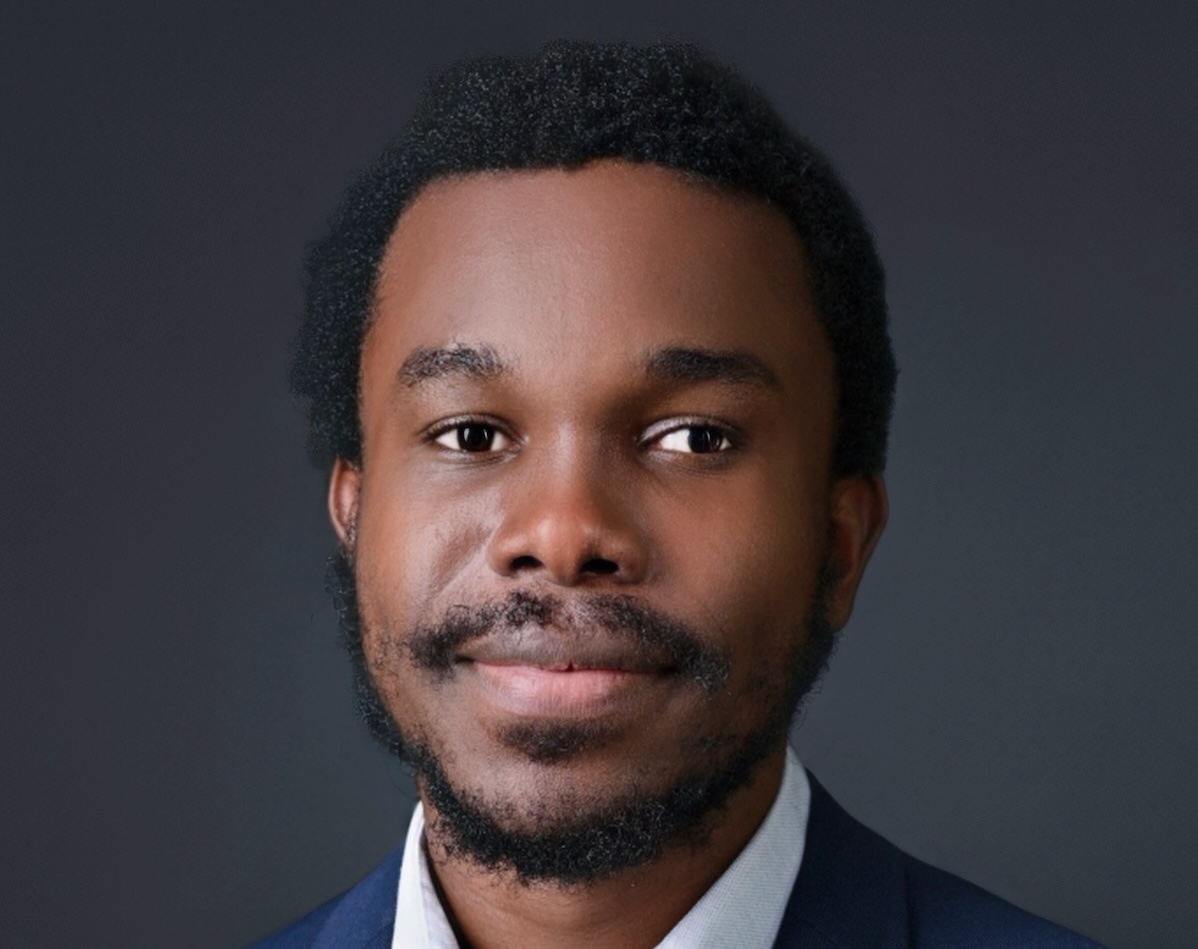
Inside the systems of water utilities across Africa sits data that almost nobody reads: consumption records, billing figures, non-revenue water that a utility produces and never earns a shilling on. Mbasha Seth (Applied Data '25, Democratic Republic of the Congo) spends his days pulling that data into the open, where a manager can act on it.
He does this as a Lead Data Fellow at Athena Infonomics, which co-founded the Africa Utility Data Collaborative with the African Water and Sanitation Association. In this role, Mbasha works alongside country-level fellows to help shape the shared data architecture and dashboard frameworks across an initial cohort of three utilities (NWSC in Uganda, LWB in Malawi, and ESWC in Eswatini). Athena partnered with Equitech Futures' Applied Data Institute throughout the 2024 and 2025 cohorts to offer real-world frameworks for putting underused data to impact.
What Mbasha hadn’t expected is that Athena would reach out to him following the capstone presentations, making him the first Equitech Scholar hired directly out of an institute by a partner who had watched him work. To Mbasha, the job and the capstone are one continuous piece of work. "It's more of a continuation of the ADI fellowship. What we've been working on is mostly building on what we started working on."
The Boy Tinkerer
Long before this, there was a house in Bukavu, South Kivu, too small for the number of people and electronics inside it. Mbasha’s uncle was an electrical engineer, so there were often multimeters and screwdrivers surrounding Mbasha and his cousins.
The family lost radio after radio, along with other electronic devices, to their curiosity. "My father would come back and find that we'd opened it. We told him it had a problem, and now we are trying to fix it." The family bought the children their own television so they would leave the family set alone, then took to locking the electronics away. But Mbasha’s curiosity led him to a technical high school, intending to become an engineer.
A New System, a New Language
Conflict in the Democratic Republic of the Congo ended that plan. The family fled to Uganda and spent a long stretch at the Nakivale refugee settlement, drawing on support from relatives as well as UNHCR and the Ugandan government. "You're not hoping for any future," Mbasha says. "You just hope that the next morning when you wake up, things will be better than yesterday."
His education had been entirely in French, but Ugandan universities could not equate his results to their English language institutions. Mbasha spent close to a year carrying documents between schools and embassies, told each time to try elsewhere. Mechanical engineering was his first choice and civil engineering his second; both were closed to him. Computer science, a distant third, opened after a bridging year at Uganda Christian University.
As the oldest child in his family, his parents prioritized his schooling. "A lot was invested into my study more than it was for my siblings, so that I could help to guide them later in life." His younger brothers and sisters, arriving without English, were told they would be set back several grades before any school would take them.
English was Mbasha's third language, which he learned by declining the comfort of his own refugee community and instead seeking out Ugandan classmates. After three years, Dr. Innocent Ndibatya, the head of the department, asked one day whether Mbasha had voted in the local elections. Mbasha explained he was Congolese. "All along," Dr. Ndibatya said, "I thought that you were Ugandan."
A Messy Dataset among Equitech Scholars
Mbasha applied to Equitech Futures' Applied Data Institute as an undergraduate, unusual for a program built for postgraduates. Two things attracted him. The first was the promise of messy data. "I really want to work on hard problems. When I looked at the messiness of the data and I will have to make sense of it, I thought, this is a challenge worth taking." The second was the Communicating Innovation course, a chance to sharpen his English language skills for leadership ends.
Mbasha joined Lada Smerechynska (Applied Data '25, Ukraine), Windrex Okoth (Applied Data '25, Kenya), and Doreen Kurui (Applied Data '25, Kenya) as a capstone project team. Over ten weeks they built a dashboard to orient users to Africa Utility Data Collaborative data. If a pipe is leaking, Mbasha explains, good data can shorten the response time from days to hours.
He remembers most how completely the four complemented one another. "One of us had water and sanitation knowledge. Someone was really good with numbers. Someone else was really good at motivating the team." On days he arrived exhausted on a project call, someone else stepped up, and the next week he returned the favor. "The problem was too big for any one of us, but working as a team made the outcomes possible."
Receiving Athena’s offer prompted a moment of self-doubt for Mbasha. Only weeks out of university, he questioned whether he was ready for such an opportunity. "I'm still a child," he thought. "Why me?" But more than a month into the role, he has recognized how well the fellowship prepared him for its demands. "The pace still matches the intensity of the Applied Data Institute. That's one aspect of it that prepared me for this."
Reaching for a Translator
Partway through the fellowship, Mbasha recognized a throughline. His bachelor's thesis had taken on misinformation online, looking at how poorly it gets detected in low-resource languages compared with English or French. Sitting in ADI sessions, he kept hearing his own thesis questions come back to him from a different direction.
The fellowship led him to build Amashi. Mashi, the Bantu language of Bushi in South Kivu, is spoken by more than a million speakers and yet has no working translator or digital tools. It is Mbasha's mother tongue, and although his family made efforts to teach it to him, he never became fluent. Because it was not taught at school and other languages dominated daily life, Mashi gradually receded into the background.
His father once described reading about the language quietly disappearing.
He built a translation model against the hardest possible constraint: almost nothing in Mashi has ever been written down. "A lot of what is known about the language is oral." Nobody posts in it, so there is little for a model to learn from. Amashi is still in development, he says plainly, although the community response so far has been eager and supportive.
"It would be better if my community could also access the opportunities I’ve had. The first step is bringing their language onto the internet."
It’s an incredible feat to enfranchise more than a million people. But for Mbasha, moving his community forward is the most effective way he can pay forward what he has been given.
Written by

More articles
.jpeg)
Newsroom
From Minister of Information to the UN: Aicha Thiendella Fall’s journey into global security










Newsroom
Otieno Collins Junior Reflects on His Journey from Capstone Project to Prize-winning Startup


.webp)




.webp)


.webp)


.webp)
Newsroom
No Innovator Left Behind: How Equitech Futures uses philanthropic capital to maximize impact


Newsroom

.webp)


.webp)

.webp)


.webp)


.webp)


.webp)


