
Newsroom
TrialSage is building an AI teammate for clinical trial teams
Nov 1, 2026
5 min read
This piece is part of a series on the finalists of the 2026 Kevin Xu Innovation Challenge. This year's challenge asked applicants: as AI becomes more embedded in everyday life, how do we ensure it strengthens the capacities that make us most human rather than eroding them?
“You just keep adding people, because those people know how to use paper.”
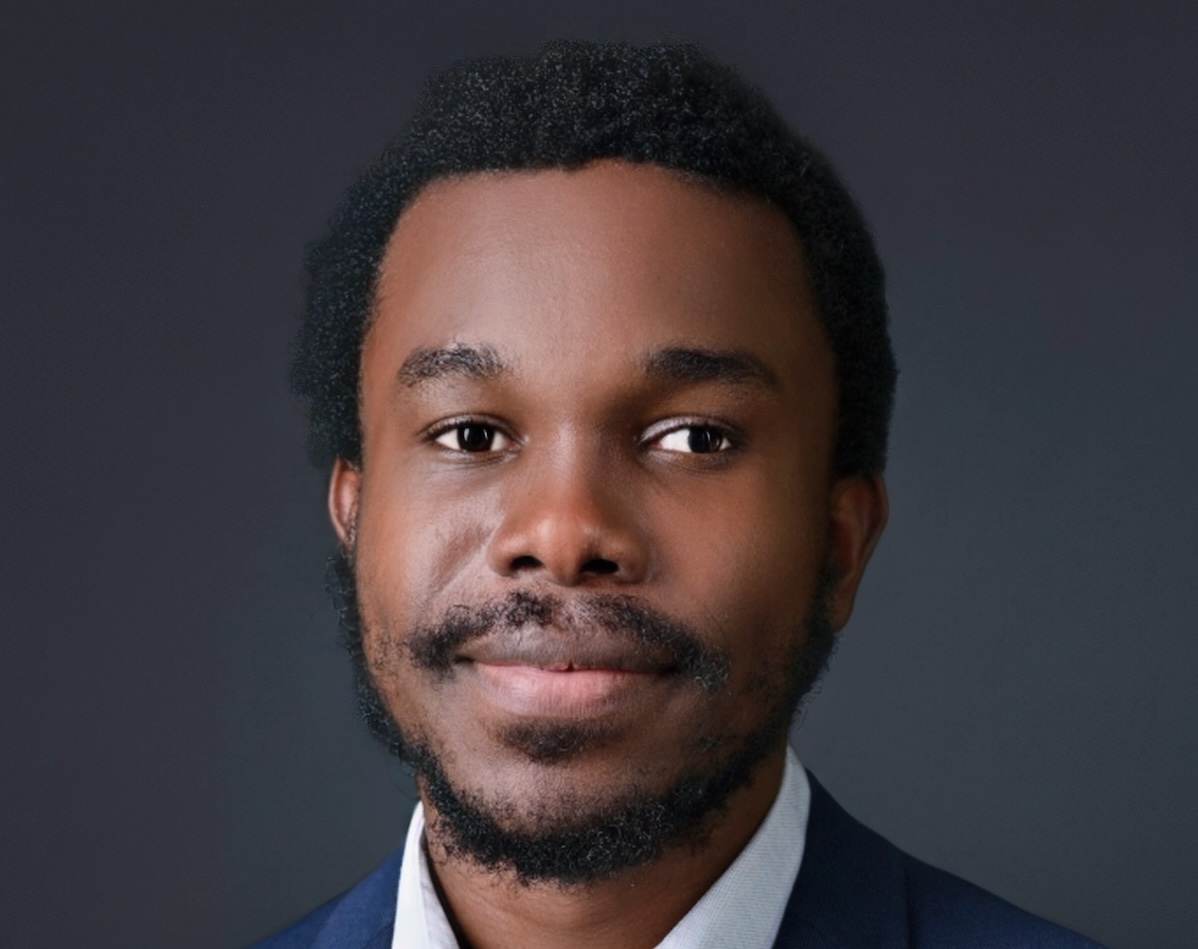
That’s how Daliso Zuze describes how current clinical trial teams manage their growing workload. While this administration-heavy approach isn’t unique to clinical trials, the stakes feel higher. This is the industry where diseases are cured and new treatments are tested before they reach patients.
Zuze knows this industry well after years of building software for a clinical research company, where he watched clinical research associates travel from site to site, collect data, transcribe it, and re-enter it in systems that don’t talk to each other. He estimates each day of delay costs a sponsor about half a million dollars in lost revenue, not to mention the time delays in breakthrough health technologies.
From software to clinical trials
Zuze grew up in Zambia and came to the UK as a Rhodes Scholar in 2004. He did a master’s in computer science and then an MBA, because he wanted to understand how technology actually makes an impact and how it creates value.
He got into clinical trials almost by accident. His wife, an immunologist, had just started at a clinical research company that needed someone to build out its software. She knew just the guy for the job and Zuze was quickly hired.
As the software expert, he built analytics portals so trial sponsors could check key metrics whenever they wanted. The teams were satisfied, but always asking for more. “You can only create so many dashboards, but there’ll always be another question,” he said. “So you always play catch-up.”
Meanwhile the people running the trials were buried in paperwork. “It just seemed like a never-ending thing of chasing paper.” This is exactly the kind of environment that AI promises to make more efficient. It’s data rich, highly structured, and currently paper and people intensive.
There's a good reason for this paper-reliance. The industry is regulated and cautious, and so the bar for new tool adoption is high and takes time. But the old way of doing things is getting harder to sustain. Turnover is high and the work wears people down, while the number of trials keeps climbing. Zuze pointed to clinicaltrials.gov, where something like 30,000 trials were started last year, and to AI-driven drug discovery, which by his count has already put at least 75 drugs into trials.
How TrialSage works
TrialSage is the AI teammate Zuze is building to solve this problem. He calls it “the newest member of your clinical trial team.”
Today, a trial team member works with a dozen tabs open, logging into system after system. TrialSage watches those systems, pulls whatever needs attention into one prioritized queue, and proactively manages routine tasks. Ask it a question about the trial in plain English, and it answers.
Zuze describes it as “like giving every single person their own chief of staff and intelligent team that can go and do things on your behalf.” The goal is to have more nimble, efficient, and intelligent systems for running clinical trials, from the research question to market deployment.
Where it is today
TrialSage is taking a building approach that’s fitting for the space – Zuze is carefully researching user needs, running lots of experiments, and putting trust and safety at the center. There is a proof of concept that answers real questions from the clinical team and the company already has one clinical research team signed on as a design partner. Zuze is pragmatic in his approach to adoption. He knows that integration will be difficult because every sponsor uses a different mix of systems and that Big Pharma companies tend to build in-house, so he’s targeting smaller, growing companies that want to stand out and are more likely to benefit from a tool like TrialSage.
Early feedback has been positive and Zuze plans to run the first customer trial in early 2027.
What’s next
When asked how much faster trials could get, Zuze hadn’t settled on a number but guessed at least 30 percent once you count everything AI might touch, from the workload TrialSage handles to smarter trial design and better participant matching. “If your trial can get to an endpoint faster, it doesn’t require as much time or as much effort to complete,” he said. Eventually he’d like a sponsor to be able to “press a button and spin up a trial with a few people,” then grow it or keep it small depending on what the study needs.
Speed is the obvious payoff, but there are other more humanistic wins as well. Clinical research associates don’t get into this field to transcribe forms, they’re motivated by the deeply human work of science as a means to answer questions that plague humans: how can we live longer, healthier lives? Paperwork crowds that work out, and it wears down the people who do it.
That is TrialSage’s answer to this year’s challenge question. Let the AI do the chasing, so the people on the team can return to the parts of the job only people can do.
TrialSage is a finalist in the 2026 Kevin Xu Innovation Challenge, part of the Rhodes Forum on Technology & Society.
Written by

More articles









Newsroom
From Minister of Information to the UN: Aicha Thiendella Fall’s journey into global security











Newsroom
Otieno Collins Junior Reflects on His Journey from Capstone Project to Prize-winning Startup




Newsroom
No Innovator Left Behind: How Equitech Futures uses philanthropic capital to maximize impact


Newsroom


