Newsroom
Selv wants you to have your own personal health model
Nov 2, 2026
5 min read
This piece is part of a series on the finalists of the 2026 Kevin Xu Innovation Challenge. This year's challenge asked applicants: as AI becomes more embedded in everyday life, how do we ensure it strengthens the capacities that make us most human rather than eroding them?
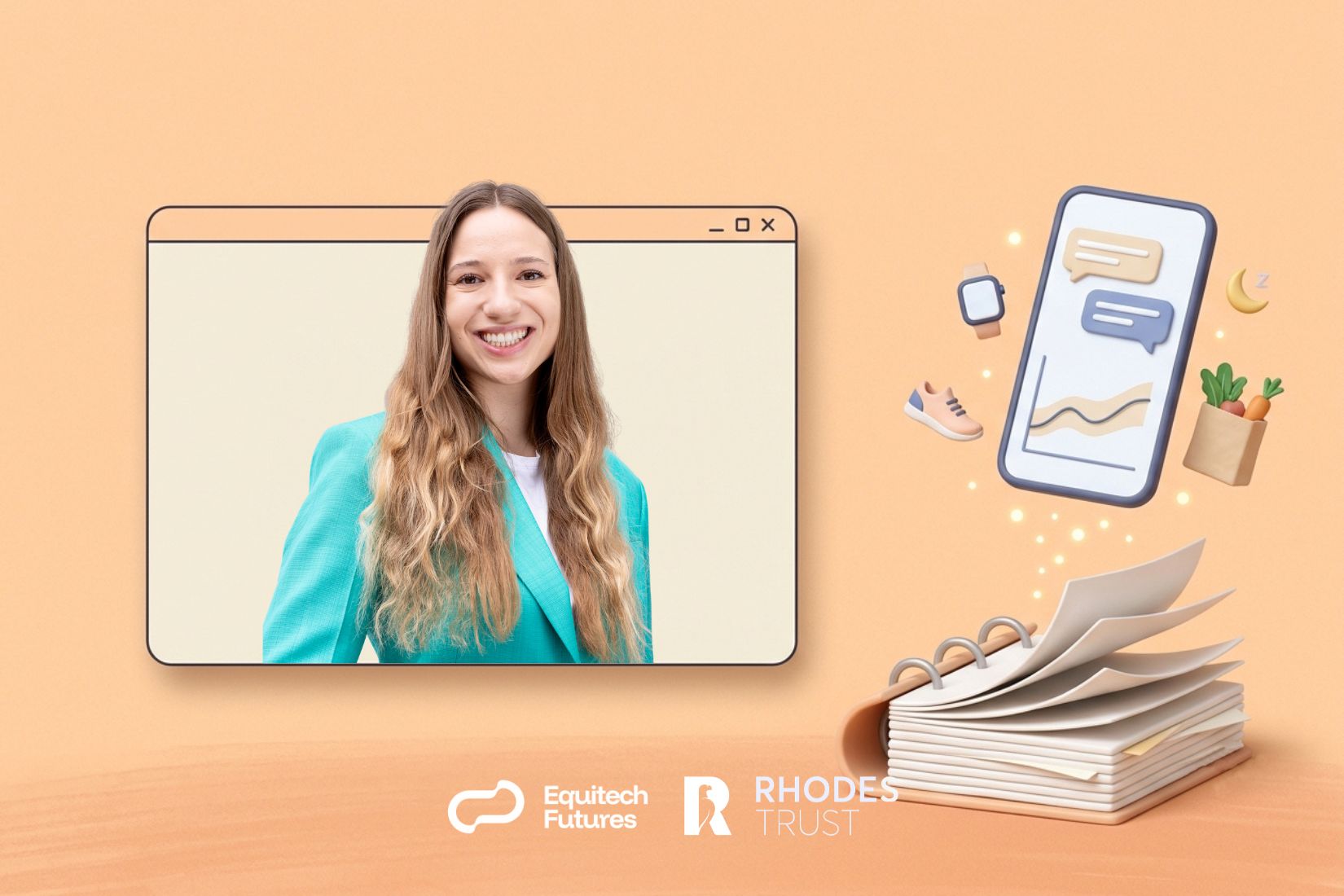
Laura Wegner’s father is older and lives with chronic health issues. When he goes to a doctor’s appointment, he brings a very thick binder, and nurses and doctors sometimes get frustrated with it. “Oh, I can’t read all of this right now,” Wegner said they tell him. “Do you have a summary?” But if he walked in with nothing, he couldn’t tell them anything either. “You don’t want 100 pages, but you also don’t want zero,” she said.
Most of us know some version of this. We have more data about our bodies than ever, from step counts to sleep scores to years of lab results, yet very little of it makes it into the room where decisions get made. As Wegner put it, “a human eye can’t look at 3 blood tests over the last couple years and draw connections during a 6-minute appointment.” It’s a problem AI should be good at, and the opportunity Selv is ready to lean into.
A founder who wants to build for the average person
Selv is a personal health AI model that brings together health records, wearables, training, sleep, calendar, environment and routines to help a user make better healthcare decisions. It’s a tall order and one that brings up a whole slew of questions about data, healthcare technology, and how to build for rapidly shifting consumer sentiment about AI in intimate and consequential domains like personal health. But Wegner is a builder at heart and a proven founder with domain expertise and training in healthcare economics and computer science from Harvard, Stanford, and Oxford.
For the past four years she has worked in healthcare technology from several angles. Her frustration with fragmented health data led to her previous startup, a healthcare data passport that securely stores, shares and analyzes patient data, which she ran for three and a half years. She has also worked in three clinical AI labs on technologies that help physicians make decisions.
As an endurance athlete, she is well versed in how to care for the human body. But her core insight is that most of us already know what being healthy looks like. Exercise more, eat more fruits and vegetables and less sugar, manage our stress levels at work better. The hard part is making the changes and sticking to them.
Learning one body at a time
Selv pulls together everything that shapes your health, starting with health records and wearable data and extending to your physical and social environment: your calendar, how and when you work, your social interactions, and the air and water quality wherever you are. Wegner practices what she preaches. Her smart toothbrush, smart scale and even her fridge are connected, but users can share as much or as little as they like.
From there, Selv learns about your individual body by running continuous experimental loops: what to try, whether you did it, what changed, and what that teaches the model about you. Wegner described an athlete who kept feeling extremely tired on one particular morning. A wearable might simply say to sleep more, but the real cause could be a difficult conversation the night before, a stressful meeting, or how that day’s schedule threw off their eating.
Why Selv
This is where Selv goes further than pasting your data into ChatGPT. Put everything together and it all looks connected, Wegner said, and the noise drowns out the signal. Repeated N-of-1 experiments are how you start to see real cause and effect. Over time, they also build something medicine rarely has: your personal ranges. Doctors are trained on population averages, and a lab result can look normal for the population while being well outside normal for you. Today, tracking at that level takes “a lot of time and a lot of funds,” Wegner said, “a bit more on a Bryan Johnson level,” a reference to the tech founder known for spending millions on his own longevity regimen.
Selv doesn’t stop at insight. Users can work with it through a simple app or as a WhatsApp or iMessage agent, as if you were texting someone who knows you well and can also do things for you. Wegner’s mom, a gynecologist with uneven schedules and overnight shifts, uses it to plan the day after a night shift around her energy, with meals scheduled and groceries ordered if she wants them. “It’s one thing to make that goal and ask ChatGPT to give you a good recipe for a healthy soup,” Wegner said. “But it’s another thing to have the bag of groceries show up in front of your doorstep and you then making the soup.”
Selv is only a couple of months old, but it already has a waitlist of over 1,700 people and has spent $0 in marketing and promotion. Wegner is currently running a closed beta with 75 people and has 97% retention over two months, with most users using Selv daily. The endurance communities she belongs to, with their regular in-person events, have become a steady source of testers and feedback, and early users include performance athletes.
Back to the binder
In 18 months, Wegner wants Selv in the hands of the average person from her cousins, nieces and nephews to her parents and grandparents. She wants people to walk into a doctor’s appointment knowing what to share, noting that by her estimate “basically 98%” of the measurements you could have never communicated at an appointment. Longer term, she is working toward a forecasting model that can predict health states months to years in advance.
She also sees personal ranges as a precondition for the bigger promises of AI in medicine, from accelerated drug discovery to truly personalized care. Without them, that care stays available mainly to people who can pay for it. With them, she said, healthcare can be personalized “not just for, you know, people who can afford really expensive treatments, but truly for the average person.”
The challenge asked how AI can strengthen the capacities that make us most human, and Wegner’s answer starts with her father’s binder. Picture someone like him walking into a six-minute appointment with his own personal ranges already worked out, so the doctor can see at a glance what has changed. The AI handles the measuring and pattern-finding that no one has time to do by hand, and the patient and doctor get their time back for the conversation about what to do next.
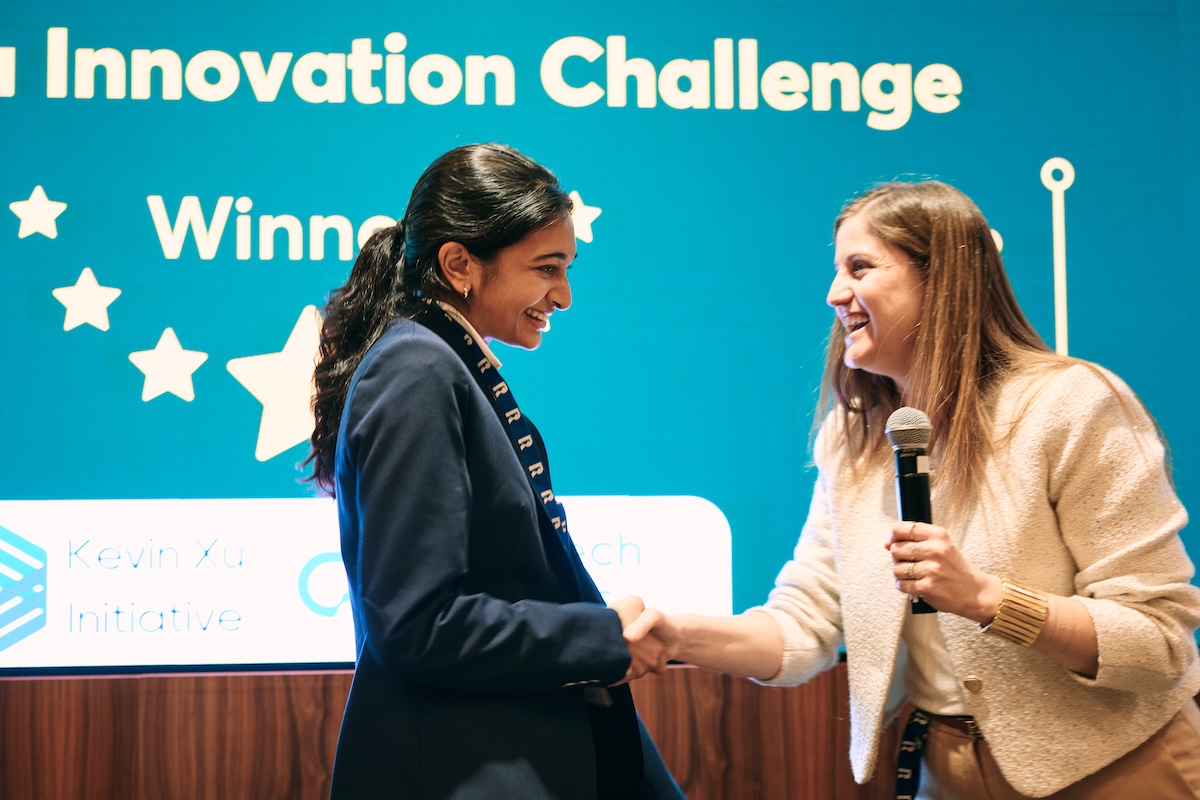
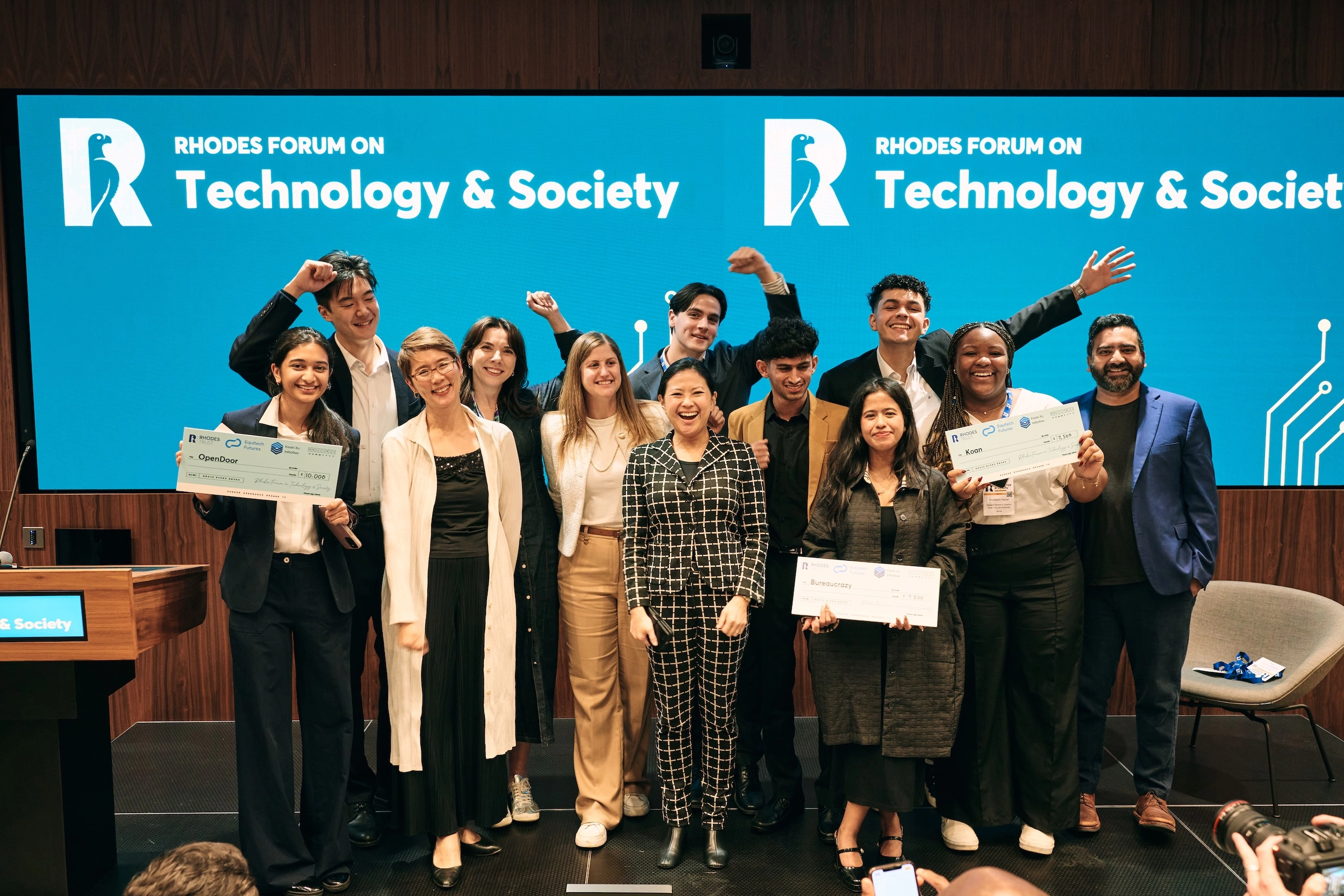
Selv is a finalist in the 2026 Kevin Xu Innovation Challenge, part of the Rhodes Forum on Technology & Society.
Written by


More articles



Newsroom
From Minister of Information to the UN: Aicha Thiendella Fall’s journey into global security










Newsroom
Otieno Collins Junior Reflects on His Journey from Capstone Project to Prize-winning Startup




Newsroom
No Innovator Left Behind: How Equitech Futures uses philanthropic capital to maximize impact


Newsroom


